The Independent Electoral and Boundaries Commission (IEBC) has intensified preparations for the 2027 General Election, bringing together key security and justice sector stakeholders to strengthen coordination and address emerging electoral security risks.
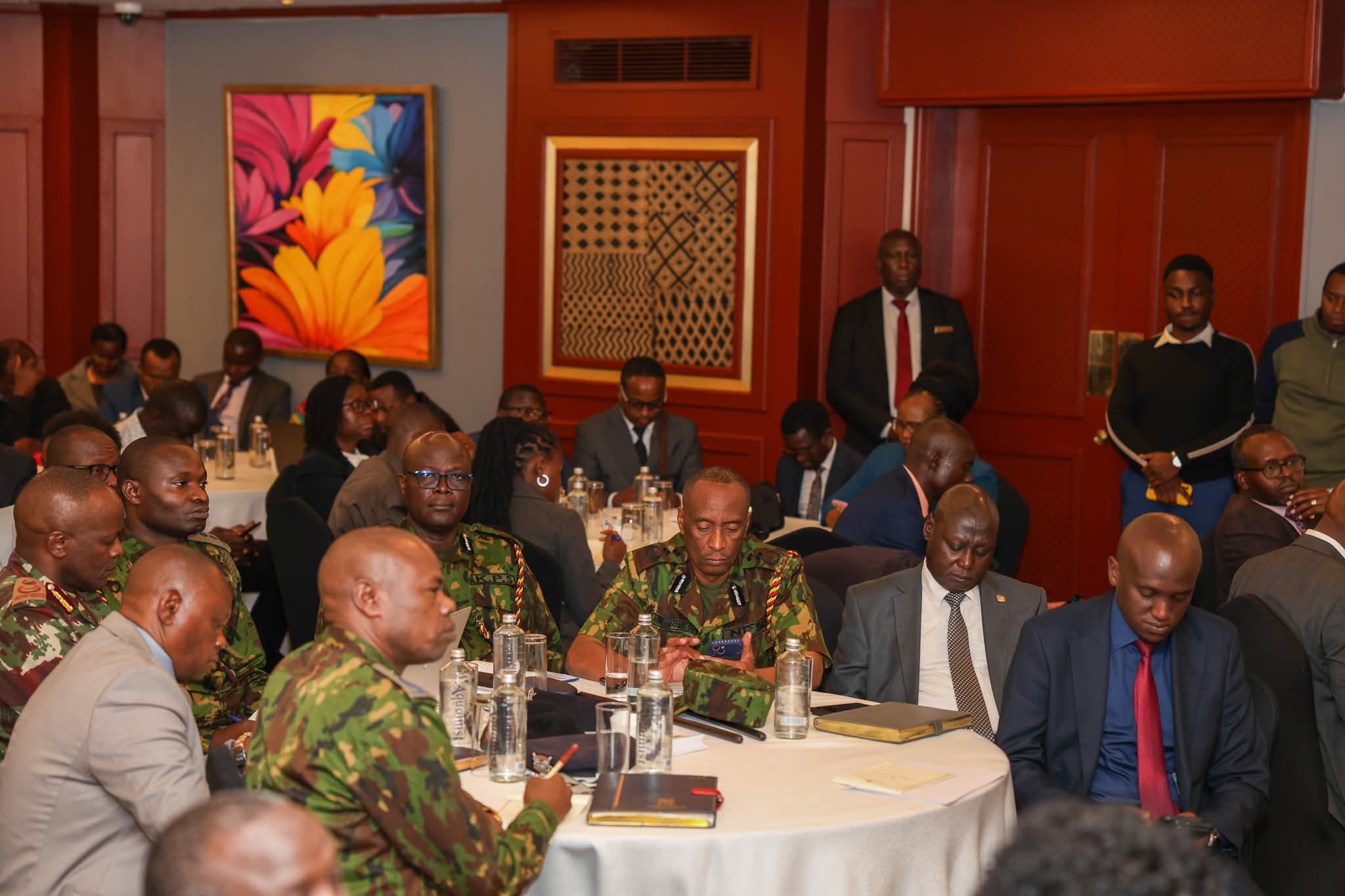
I joined IEBC Chairperson Erastus Edung Ethekon during the High-Level National Election Security Roundtable Consultative Forum, which brought together representatives from security agencies and other key institutions involved in safeguarding the electoral process.
The forum provided an important platform for stakeholders to deliberate on election security preparedness, review lessons from previous electoral cycles and strengthen institutional coordination ahead of the 2027 General Election.
In his opening remarks, Chairperson Ethekon expressed appreciation to the participating institutions and noted that the Commission had gazetted the election period and published the electoral timelines, providing Kenyans with a clear roadmap towards the 2027 General Election.
He observed that the gazettement sets in motion a series of electoral activities, including preparations to address security challenges that may arise during the election period.
“Our country is as strong as the institutions, values, principles and people we have,” Ethekon said, emphasising the need for collective responsibility in protecting the country’s democratic institutions.
He further noted that IEBC, together with its stakeholders, was committed to taking necessary measures to ensure a peaceful, free, fair and credible electoral process. He urged stakeholders to draw lessons from previous elections and work towards ensuring that political competition remains lawful and peaceful.
“Elections come and go but we shall always remain as Kenya,” he said.
Strengthening the Justice Chain
The Chief Guest, Hon. Justice Daniel K. Musinga, Judge of the Court of Appeal and Vice Chair of the Judiciary Committee on Elections, highlighted the critical role of the Judiciary in resolving electoral disputes.
Justice Musinga clarified that the Judiciary is not an electoral management body, but has a constitutional role in ensuring that disputes brought before the courts are determined independently, impartially and expeditiously in accordance with the law.
He called for the protection of judges and magistrates handling electoral disputes and urged institutions represented at the forum to work together to strengthen the capacity of the justice system to effectively handle election-related cases.
He also underscored the need for effective investigation and prosecution of offences such as violence, intimidation, bribery and destruction of electoral materials.
Police Commit to Election Security
Inspector General of the National Police Service, Douglas Kanja, described the roadmap towards the 2027 General Election as comprehensive, noting that security preparations would begin in September and continue beyond the election period.
He said the National Police Service would strengthen election security coordination, align security operations with electoral laws and develop election security deployment and communication plans.
The IG also highlighted the importance of training and leadership sensitisation, reaffirming the National Police Service’s commitment to supporting IEBC in delivering a peaceful electoral process and providing the necessary resources for election security.
Managing Electoral Risks
Hassan Noor Hassan, EBS, Chairperson of the Election Security and Electoral Risks Management Committee, said the Commission is obligated to ensure that elections are conducted in an environment free from fear, threats and manipulation.
He noted that while IEBC does not have enforcement instruments for maintaining security, it relies on security agencies to provide the necessary support during the electoral process.
He outlined the Election Security and Electoral Risks Management Strategy (ESAP), which focuses on early warning and risk analysis, prevention, mitigation, monitoring, response and intervention.
The strategy also places emphasis on capacity building, coordination, communication, prevention of electoral gender-based violence and public engagement.
Commission Secretary/CEO Ruth Kulundu stressed that electoral integrity is inseparable from a secure environment. She noted that the full implementation of ESAP will be critical in fostering cooperation between the public, police and institutions involved in the electoral process.
A key component of the preparations will be the professional training of security personnel, with approximately 200,000 police officers and special police officers targeted for training ahead of their deployment during the 2027 General Election.
A Collective Responsibility
The discussions at the roundtable demonstrated that securing an election requires more than the efforts of a single institution. It calls for coordinated action among the electoral commission, security agencies, Judiciary, political actors, civil society, the media and the public.
As Kenya moves towards the 2027 General Election, the continued engagement of these institutions will be important in identifying risks early, strengthening preparedness and ensuring that electoral disputes and security concerns are addressed within the law.
The forum therefore marked another step in the broader preparations for the 2027 General Election, with stakeholders reaffirming the shared responsibility of protecting Kenya’s democratic process and maintaining peace before, during and after the elections.
#2027GE #YourVoteYourVoice